About Kausalyze

Industrial decisions need more than correlation.

We founded Kausalyze on the conviction that correlative AI is insufficient for decision critical industries.

Decision AI needs to reason with the power of cause-and-effect, and that comes from an understanding of the physics of a system. That is what Kausalyze provides.

AI built by chemical engineersUniversity heritageChemical engineering × causal AI
Why we built Kausalyze

Why do monitoring tools rely on correlation?

They were built with an engineer in the loop. The software identifies patterns. The engineer interprets the physical cause and decides what to change.

The traditional monitoring workflow
  1. 01 / THE TOOLS

    Identify patterns

    Show which variables move together.

    SPC · PCA · Predictive AI
  2. 02 / THE ENGINEER

    Interpret the cause

    Use process knowledge to explain the relationship.

    The causal understanding sits here
  3. 03 / THE DECISION

    Choose the action

    Decide what to change in the plant.

    Operations · Maintenance · Improvement

That works when cause and effect are easy to unpick. Larger plants, recycle streams and interacting control loops make the relationships harder to trace. Efficiency targets push the search further, into interactions beyond the team's existing mental map.

More data alone does not close that gap. Engineers need to test what a change will do, not just recognise a pattern in what has happened.

Kausalyze makes causal relationships explicit and testable, combining plant data with process physics and engineering knowledge to help determine what to change.

What we build on

Engineering knowledge belongs in the model.

Kausalyze combines the relationships engineers already understand with causal discovery from plant data. Proposed links are constrained by process physics and reviewed with the people who know the unit.

01 / CAUSAL RELATIONSHIPS

Find what drives what.

Kausalyze models how changes propagate across connected equipment and utilities, including their time delays. The aim is to distinguish upstream drivers from the symptoms they produce.

02 / PHYSICAL CONSTRAINTS

Constrain the explanation.

Mass and energy balances and process connectivity constrain the relationships the model can propose. Causal links that violate those constraints are rejected.

03 / ENGINEERING REVIEW

Make the evidence visible.

Important proposed relationships are shown to engineers with the supporting evidence. They can confirm or reject them, and the model is updated accordingly.

Find the cause. Show the evidence. Test the change. Quantify the impact.

See how it works
Our origins

From process safety research to industrial decisions.

  1. University of Sheffield
  2. Kausalyze founded
  3. Industrial collaboration

Kausalyze grew out of the process safety group at the University of Sheffield. Our research examined how faults propagate through chemical processes, and how causal machine learning could help explain them.

That work was published in peer-reviewed journals including Computers in Industry and Computers and Chemical Engineering. In 2025, we founded Kausalyze to bring that research into the decisions engineers make about real plants.

We combine chemical engineering and causal AI to help engineers investigate relationships across the process, from the upstream driver of a recurring failure to an opportunity to reduce energy use or improve production.

Team

Meet the team

Our team brings together process research, industrial operations and experience building technology companies. Open a profile to explore their background.

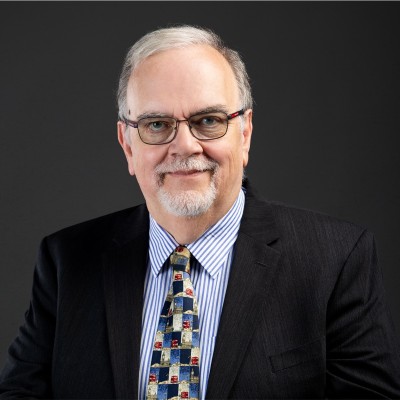
Dr Louis Allen CEO and FounderDr Louis AllenRead bioClose bio
Background & experience

Dr. Louis Allen is the Founder and CEO of Kausalyze, an industrial causal AI spin-out from the University of Sheffield. Building on a chemical engineering foundation, Louis developed the causal architecture behind Kausalyze during his PhD and post-doctoral research in causal AI for process monitoring under Professor Joan Cordiner. His academic work has been recognised with the prestigious Mike Sellars Medal, and the British Coke Research Association award. An IChemE Young Researcher Award finalist in 2024, Louis has published his work in peer-reviewed journals and regularly speaks at international conferences. Louis merges causal AI with deep domain expertise to help multinational manufacturers diagnose and prevent costly equipment failures through true root cause analysis.

LinkedIn
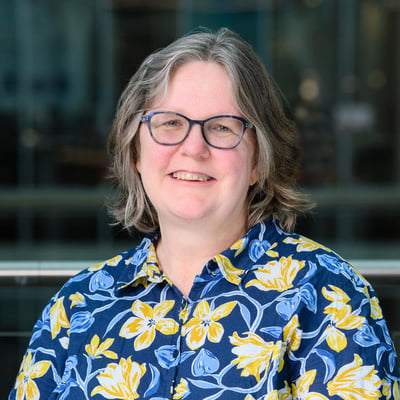
Steve Kerridge Executive ChairSteve KerridgeRead bioClose bio
Background & experience

Steve Kerridge is the Executive Chair of Kausalyze, where he leads the company's go-to-market strategy. With a background in mechanical engineering, Steve brings 25 years of start-up and scale-up experience to the board and has successfully led three spin-out exits. Working closely with the founding team, he leverages his extensive commercial leadership to guide organisational structuring, scale operations, and drive the global deployment of Kausalyze’s industrial causal AI solutions across the chemical and process manufacturing sectors.

LinkedIn
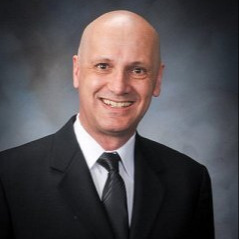
Chris Levett Business Development SpecialistChris LevettRead bioClose bio
Background & experience

With 50 years of experience in the oil and gas sector—including over 30 years dedicated to industrial automation—Chris Levett is a leading supply chain management expert and the founder of Chrislevett Consultancy (CLC). Having previously served as Managing Director and opened Krohne Oil and Gas operations in the Middle East, he holds extensive C-level relationships across the UAE, Saudi Arabia, and Iraq. Today, he leads regional business development and specialises in optimising complex global supply chains. His results-driven approach spans procurement, logistics, and vendor management, delivering tailored solutions that reduce costs and drive operational efficiency.

LinkedIn
Prof Joan Cordiner FREng AdvisorProf Joan Cordiner FREngRead bioClose bio
Background & experience

Professor Joan Cordiner brings over 30 years of executive leadership in the global chemical industry (Syngenta, AstraZeneca, ICI) to her role as Head of the School of Chemical, Materials and Biological Engineering at the University of Sheffield. A recognised pioneer in process design and risk management, she actively bridges academic research with industrial application. Joan is a Fellow of the Royal Academy of Engineering and the Royal Society of Edinburgh, and is the incoming President of the Institution of Chemical Engineers (IChemE). Her current research leverages advanced mathematical and data-driven modelling to solve critical challenges in process safety, sustainable scale-up, and industrial digitalisation—driving real-world innovations like the Kausalyze spin-out.

LinkedIn
Dr Franz Deimbacher AdvisorDr Franz DeimbacherRead bioClose bio
Background & experience

Franz Deimbacher brings over 25 years of global oil and gas experience to his current role as Head of Technology for Energy at AWS in Houston. He previously drove technical innovation as VP Energy at IHSMarkit and held senior leadership roles across five continents at Schlumberger. A seasoned innovator with a background in disruptive startups, he serves as VP of the Board for the Society of High-Performance Computing Professionals. He holds a PhD in Reservoir Engineering and an MSc in Petroleum Engineering from the Mining University Leoben, backed by over 40 publications and multiple patents.

LinkedIn
AdvisorMichael TreadwellRead bioClose bio
Background & experience

Michael has more than 25 years across upstream oil and gas operations and private equity investment, with a strong network in the Middle East and US energy markets. He advises on commercial strategy.

Partners and supporters

We are proud to be supported by

University of Sheffield Innovate UK ICURe Explore Plug and Play Tech Center
Greentown Labs Barclays Eagle Labs
Where we are going

A causal backbone for autonomous manufacturing.

Our ambition is to put a process-specific causal model between plant observations and operational decisions. Greater autonomy needs a foundation for reasoning about what a change is likely to do.

01 / Observe

Plant data

Control systems operate the plant. Historians and monitoring systems record its behaviour and flag conditions.

02 / Understand

The causal reasoning layer

Kausalyze connects observations to upstream drivers, with process physics constraining the model and engineers validating important relationships.

03 / Decide

Operational action

Engineers use the model to test interventions, compare expected impacts and determine what to change.

General-purpose language models can provide useful interfaces to industrial information. On their own, they do not provide this process-specific causal foundation. Our starting point is an engineer-validated model of one unit; autonomous operation is a longer-term ambition, not a pilot deliverable.

Help turn cause and effect into better plant decisions.

Bring us a recurring process problem, or join the team building the causal foundation to solve it.